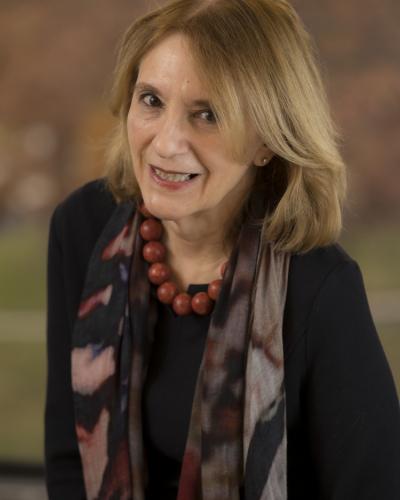
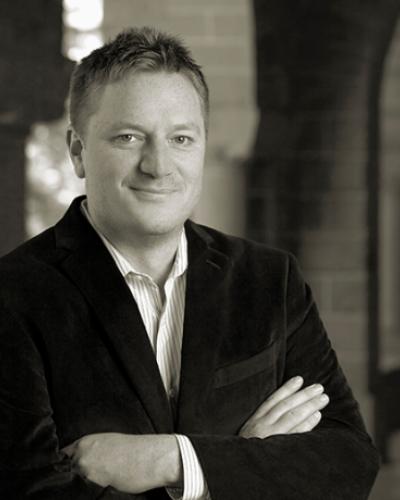
Thomas Davidson, PhD Student in Sociology, works with Michael Macy

Department of Sociology

 The department is known for the cutting-edge research of its faculty and for its exceptionally strong graduate and undergraduate training programs.

The department’s focus on basic science is complemented by a deep commitment to informing public and educational policy, particularly on issues related to gender and racial inequality, income inequality, poverty, drug use, economic development, school funding, organizational practices and race and ethnicity.

Sociology News

More News

Events

Feb 20
Friday

Mental States: Ordering Psychiatric Disorder in France

Friday, Feb, 20 - 03:00 PM

Uris Hall G08

This is a inperson event.

Event speaker

Alex V. Barnard

Assistant Professor of Sociology at NYU

Description

Presented by Alex V. Barnard, Assistant Professor of Sociology at New York University (NYU)

Is there an underlying order to how societies classify, treat, and control madness? Both popular and scholarly portrayals of contemporary mental health systems emphasize service fragmentation and inter-professional competition. In this talk, I draw on a year of in-depth fieldwork in France, including observations in a public mental health clinic, social service office, and courts, supplemented with nearly two-hundred interviews with administrators and clinicians, to show the underlying logic to the trajectories of people with serious mental illness through the welfare state. As I show, decision-making across these sites is linked by a shared conception, both embedded in formal policy and informal practices, of what makes someone a malade—a real mentally-ill person. This strong medical and bureaucratic identity ties this population to a paternalist, protective psychiatric system, in sharp contrast to the U.S., where the absence of a clear administrative category for this population leads to a chaotic mix of coercion and care from jails, shelters, and hospitals. While these results reveal the power of the French state to construct a particular definition of what it means to have a serious mental illness, I show how defining the population in this way constrains attempts to reform the system. This talk suggests how the dynamic interplay between categories adopted in official policy, used in professional practice, and adopted by populations themselves can reproduce national differences, even in an era where psychiatric knowledge and medical treatment are converging across national borders. 

Speaker

Alex V. Barnard is an assistant professor of sociology at New York University and holds a PhD in sociology from the University of California, Berkeley. His work examines medical and bureaucratic decision-making, welfare policy, and social control comparatively. His previous book, Conservatorship: Inside California's System of Coercion and Care for Mental Illness (Columbia University Press)examines California's involuntary treatment system, showing how a failure of government oversight and inter-agency coordination leads to the extensive use of coercive interventions that provide neither care nor control. Ongoing projects include examining trends in national legislation around involuntary psychiatric treatment, analyzing variation in the policing of protests and university responses to the 2024 student protest encampments, and the governance of emerging addictions to online gambling and AI.

Host
Institute for European Studies, part of the Einaudi Center for International Studies

Co-host 
The Department of Sociology Colloquium Series

Contact information

For more information contact Patricia or Aidan

Mar 06
Friday

Christine Percheski

Friday, Mar, 06 - 03:00 PM

Clark Hall 291

This is a inperson event.

Event speaker

Christine Percheski

Northwestern University

Description

Christine Percheski, Associate Professor of Sociology at Northwestern University, will give a talk as part of the Sociology Colloquium spring series. 

Title:

Wealth, Sibship Size, and Economic Transfers between Siblings in Adulthood


Abstract:

Over 90% of U.S. adults have siblings, but we know little about how siblings affect each other’s economic resources in adulthood. I investigate how sibship size and wealth are linked in the United States and possible mechanisms underlying this association. With data from multiple datasets, I show that sibship size is predictive of wealth in adulthood, net of many individual characteristics. With data from the Survey of Consumer Finances and my own new data collection, I also show that economic transfers between siblings are relatively common, patterned along axes of inequalities, and vary by sibship size. I argue that sibship size an underappreciated mechanism in the reproduction of economic inequality in the contemporary U.S.

Apr 10
Friday

Adam Reich

Friday, Apr, 10 - 03:00 PM

Clark Hall 291

This is a inperson event.

Event speaker

Adam Reich

Columbia University

Description

Adam Reich, Professor of Sociology at Columbia University, will give a talk as part of the Sociology Colloquium spring series.

TALK TITLE: 

Inside Jobs: Prison Work in the American Labor Market

Abstract:  

It is easy to think of prison work as the opposite of work on the free market: The prisoner working without pay in the mess hall, or making license plates for $0.40 an hour, seems more comparable to an enslaved person than to someone working a job on the outside, however bad that job may be. Such a distinction is baked into our common sense and into our jurisprudence, and it has played an important symbolic role in American political and social life, from the earliest campaigns of the American labor movement to the modern-day prison reform movement.  But it obscures as much as it clarifies. It masks the coercion underlying systems of “free” labor, as well as the different forms of freedom that incarcerated people have occasionally exercised in relationship to their work inside. Rather than view prison work as the opposite of “free” labor, then, Inside Jobs considers the prison as an important site in which ideas and practices about the relationship between work, coercion, and freedom have been developed and contested across different periods of American economic history.

Apr 17
Friday

David Melamed

Friday, Apr, 17 - 03:00 PM

Clark Hall 291

This is a inperson event.

Event speaker

David Melamed

The Ohio State University

Description

David Melamed, Professor of Sociology at The Ohio State University, will give a talk as part of the Sociology Colloquium spring series: 

How to stop the emergence of segregation in cooperative networks

David Melamed, The Ohio State University

Abstract: Cooperation among animals is a paradox because individuals are better off not cooperating with others. One prevalent explanation for the high levels of cooperation we observe among humans is the effect of the network structures in which we are embedded. Clustering structurally insulates cooperators, enabling high rates of cooperation within network communities or clusters. At the same time, we know that networks are clustered by demographic attributes. Taken together, the result is demographically similar clusters with high rates of cooperation. That is, these two processes generate the emergence of cooperative but segregated clusters. Here we present two studies on these processes. Study 1 documents the results described above, and study two systematically varies types of reputations. We find that we can eliminate the emergence of segregation by altering the types of reputations that are used in the networks. I conclude with a discussion of reducing segregation in polarized contexts.

Crowd around a fountain

What is Sociology?

Sociology is the study of social life, social change, and the social causes and consequences of human behavior. Sociologists investigate the structure of groups, organizations, and societies, and how people interact within these contexts.

Because all human behavior is social, the subject matter of sociology ranges from the intimate family to the hostile mob; from organized crime to religious cults; from the divisions of race, gender, and social class to the shared beliefs of a common culture; and from the sociology of work to the sociology of sports.

Because sociology addresses the most challenging issues of our time, it is a rapidly expanding field whose potential is increasingly tapped by those who craft policies and create programs.

If you think you might be interested in Sociology, start by taking a class. Or, learn more about the major.

Professor Michael Macy with a grad student

The Graduate Program

Cornell’s Graduate Field of Sociology provides top-notch training toward the PhD in Sociology, and has long been known for its emphasis on both theoretical innovation and methodological rigor. The Field, which is much larger than the Department, has close to thirty faculty members. 
Click here to explore our graduate program.

Sociology Jeopardy

Jeopardy!

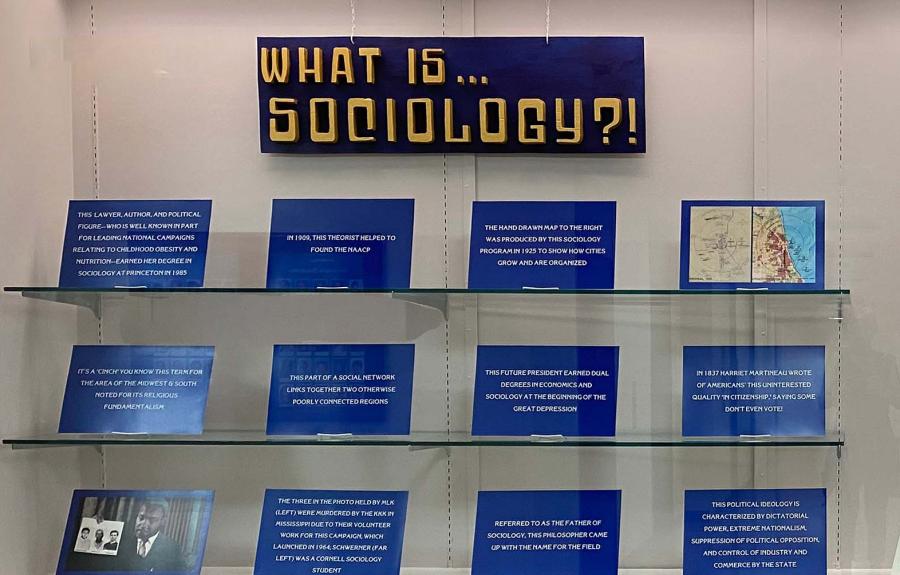
Check out the Department's Jeopardy! display case on the 3rd floor of Uris Hall and the corresponding Jeopardy! page, home to solutions, history, and a place where you can share your trivia ideas with us. 

Top