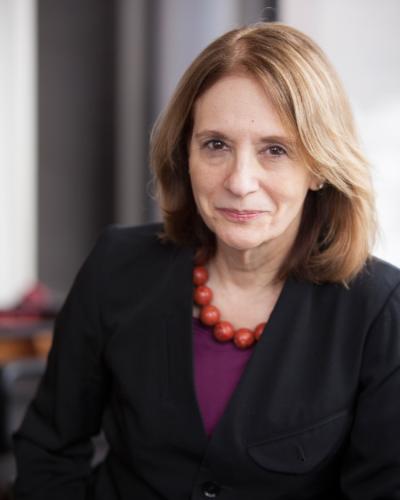
David Grazian speaks with sociologist Mabel Berezin about America's rapid decline into authoritarianism and unchecked presidential power.
(Read the full interview with Mabel Berezin in CONTEXTS—ASA’s general interest Sociology Journal.)
"In just the first year of his second term, President Donald J. Trump has taken the country down what feels like a frightening path toward authoritarian rule, especially when compared to the rhetoric and actions of past U.S. presidents. The evidence is everywhere. In 2025 alone, Trump deployed the Department of Justice and the FBI to go after his political opponents, such as James Comey and Letitia James, while pardoning supporters previously convicted of corruption and insurrection. He has suggested running for a third term, even though the 22nd Amendment to the U.S. Constitution explicitly forbids it. He has attacked his own government agencies for reporting inconvenient and unflattering data regarding the economic and social well-being of the country. He has defunded dominant American institutions that serve as competing sources of power, influence, and knowledge creation and dissemination, including colleges and universities. He has attempted to influence media coverage of his administration by threatening and suing major television networks and starving public radio and TV outlets.
Additionally, President Trump has dismissed America’s longstanding separation-of-powers principle by assuming the role of a unitary executive, as seen most clearly in his defiance of federal court decisions and his usurpation of Congress’s power of the purse. He has also viciously deported scores of immigrants—many of whom legally reside here and possess green cards—to faraway countries like El Salvador and Iran without due process, and has deployed U.S. military personnel, including the National Guard, to suppress protest and dissent in American cities like Los Angeles. He has declared national emergencies under false pretenses and has sought to use the immense power of his position for personal financial gain. And of course, much of this was foreshadowed during Trump’s first term, which concluded with his denial of the legitimacy of the 2020 presidential election and subsequent urging of his supporters to violently storm the U.S. Capitol Building to overturn the results of that election and lawlessly disrupt the orderly transition of power as outlined in the U.S. Constitution.
To explore how sociological perspectives can contribute to a better understanding of Trump’s political popularity among the American right and his slide toward antidemocratic rule, I turned to Mabel Berezin, Distinguished Professor of Sociology and Director of the Institute for European Studies at Cornell University, for insight. Berezin’s areas of expertise include historical and contemporary iterations of illiberal politics, political culture and communication, and global history. Her award winning book, Making the Fascist Self: The Political Culture of Interwar Italy, is one of her many publications about fascism and the right. Her latest book, The End of Security and the Rise of Populism, is currently under contract at Oxford University Press."
We conducted this interview over Zoom last year on the afternoon of Friday, November 21. It has been edited for length and clarity.
DAVID GRAZIAN [DG]: So, let’s jump into it. In a recent panel that you were on this past September, you referred to Trump as taking a “highspeed wrecking ball” to our most cherished democratic institutions. How might your past research on mid-century European fascism leading up to and during World War II—most notably, Nazi Germany and fascist Italy— help to explain or foreshadow some of the anti-democratic actions taken by the first and now second Trump administration? Are there dangers or pitfalls in suggesting parallels between such radically different historical moments?
There’s a lot of theater of grandiosity in Trump’s public gestures, such as tearing down the East Wing of the White House to build a ballroom and painting the Oval Office gold.
MABEL BEREZIN [MB]: Thank you for inviting me and asking me these questions.
I think there is a seductive aspect to the comparison to fascism because, on one level, you can look at the spectacle around Trump and say, “Oh yeah, it’s the same thing.” But I think that there is an interesting analytic question about what “fascism” really is. And that’s a question that everybody stumbles on, since a lot of things that people identify with fascism are not necessarily unique to fascism—for example, political violence, suppression of the press, or the destruction of institutions. And that’s important, because there are so many different time periods and so many geographies. How did those regimes in Europe come to be? Why did they take the forms that they took? Persons of all stripes toss the word “fascism” around quite a bit. But I think we need to take a much more nuanced look. To talk about the Trump phenomenon, and then to talk about what was going on in Europe in the 1920s and 1930s—or what’s going on in all the different nation-states of Europe right now—these are all separate things. They look alike, and they have some similarities, but their contexts are very different.
Now, that doesn’t mean we have nothing to learn from what was happening in Europe in the 1920s and 1930s, because what we now see is how quickly things can fall apart and how badly they can go, depending on who’s in charge, so to speak.
DG: One of my favorite articles of yours is an American Journal of Sociology piece that discusses what you call the “language of style” in state-sponsored theater in fascist Italy. In that paper, you argue that the cultural form of public rituals and events during Mussolini’s reign was just as important as their content. What if we apply this insight to the MAGA case? What kinds of collective rituals does Trump rely on to promote his desire for authoritarian power? Here, I’m naturally thinking about the military parade held on his birthday in Washington last June, but also the chauvinistic and violent rhetoric and style of his rallies, which carry over to his speeches and other public presentations. Do these public displays resemble the kinds of spectacles that you describe in your work?
MB: That’s a really good question. I do think the style is important. There was a rally that Trump held in Madison Square Garden in New York during the 2024 election season. The Madison Square rally reminded me of Leni Riefenstahl’s Triumph of the Will, only with less effective cinematography, and pop culture stars such as Hulk Hogan replacing the Nazi functionaries. Yet the enormity of the Nazi event and the Trump event both conveyed power—real or imagined. There’s a lot of theater of grandiosity in Trump’s public gestures, such as tearing down the East Wing of the White House to build a ballroom and painting the Oval Office gold.
I also thought Trump really milked his so-called assassination attempt. Right afterwards the pictures came out, and they were pictures of strength and fighting on. Masculinity is a big theme of his. There’s a lot of messaging there. Symbols are always important in politics, and the vaguer, the better, like “Make America Great Again.” What precisely would make America “great” again?
DG: You’ve pointed out on recent panels and in interviews that the most urgent threat to American democracy currently is not the mobilization of paramilitary groups like those who stormed the Capitol Building on January 6, 2021, but instead what you identify as the “social authoritarianism” wielded by conservative intellectuals and thinktanks like the Heritage Foundation and the Federalist Society. Can you explain why efforts like Project 2025 might be even more dangerous to American traditions of democratic rule than mob violence?
MB: I used to be worried about paramilitaries, but in truth, most Americans don’t get behind people shooting other people up. I am more concerned about the others, the Project 2025 types, because they’re smart and educated. They’re literate, and they’re coherent. They have the capacity to push their agendas, and some of their agendas are not simply politically conservative, but are culturally conservative, socially conservative—restricting abortion rights, LGBTQ+ rights. They have a prescription for how people should live their personal lives. They can take away quite a few rights and do plenty of damage. I find that concerning, even frightening, because we don’t know what the next steps will be. And I think what the real issue is for me at this moment—and, I think, should be for all of us—is what happens after Trump.
What the real issue is for me at this moment— and, I think, should be for all of us—is what happens after Trump.
DG: Why do you think the Trump administration is attacking universities so belligerently?
MB: That is a really good question. Some of it, you could say, is anti-elitism. I think some of it stems from the class resentment that drives him. I mean, people say, “Oh, he’s rich. His father was rich.” But he was never accepted among the moneyed types on Park Avenue, and that drives somebody like him. There is also an anti-knowledge base in his administration. It’s been in our culture for a while that science is out to get us. And I don’t know if that’s Trump’s personal belief, but he makes use of things like that. I think we can say that. I don’t think Trump sits around and says, “I’m against the Enlightenment.” But he might sit around and say, “I hate those Ivy League schools that do X, Y, and Z to me.”
We have to become citizen sociologists. I’m not suggesting we become activists or organize protests or things. Of course, if you want to, please do. But I’ll tell you one thing we can do—teach.
DG: Let’s talk about the vilification of minorities under Trump. Antisemitism and the dehumanization of other marginalized groups famously played a major role in the consolidation of power and crushing of dissent in Nazi Germany and Stalinist Russia. To what extent should we view Trump’s scapegoating and harassment of immigrants, racial minorities, international students, and transgender people—through his travel bans, detainments, deportations, and assaults on civil liberties and equal protection under the law—through a similar lens of dehumanization and manufactured cultural and biological difference?
MB: The dehumanization, in my view, is analogous to what happened in Nazi Germany, and we know where that ended up. I am appalled at the way that they are treating migrants. As a social scientist, I would like to know who these Immigration and Customs Enforcement (ICE) people are—who ICE is recruiting. And the fact that they go around with masks—that definitely reminds me of authoritarian and fascist regimes. There is a kind of cruelty to it that I find almost inexplicable. I mean, people are visibly afraid. In theory, ICE is supposed to have regulations. But they’re running around with their masks and their guns, and nobody’s stopping them. This is something that totalitarian or authoritarian regimes do. It’s bad. There’s nothing else to say about it. You want to call it fascist? Call it what you want. It is cruelty.
DG: This has been an informative conversation. By way of conclusion, what role should sociologists be playing in helping the country understand these recent social and cultural shifts in American life?
Right now, it is necessary to get across to our students that democracy, regardless of what flaws we can identify in the system, is worth saving. As we learned in the 1930s, it is too late after it is gone.
MB: It’s a question I think about a lot. We have to become citizen sociologists. I’m not suggesting we become activists or organize protests or things. Of course, if you want to, please do. But I’ll tell you one thing we can do—teach. And I do this a lot in my classes. I try to train students to question things, to help them understand that there’s a problem here. And that’s something you can obviously do better with a small class than with a large class, but I think you can structure your large classes, also, in a way that helps students recognize that there are problems here that we need to think about. Teaching is what we have available to us. The longer I am in my teaching role, the more amazed I am at the extent of our reach. Right now, it is necessary to get across to our students that democracy, regardless of what flaws we can identify in the system, is worth saving. As we learned in the 1930s, it is too late after it is gone.
Mabel Berezin is Distinguished Professor of Sociology and Director of the Institute for European Studies at Cornell University. Her research interests include historical and contemporary iterations of illiberal politics, political culture and communication, and global history. She is the author of Making the Fascist Self: The Political Culture of Interwar Italy.